7th International Conference on Networking and Advanced Systems

ICNAS'2025

Date: October 29-30, 2025

Venue: University Chadli Bendjedi, El Tarf, Algeria

Mode: Hybrid (In-person and Virtual)

CALL FOR PAPERS - ICNAS'25

We invite researchers and practitioners to submit their original research papers related to the conference tracks. The submission should present novel perspectives within the general scope of the conference.

All submitted papers will be peer-reviewed by at least three reviewers from the Technical Program Committee to ensure quality and relevance to the conference topics. Authors of accepted papers will be invited to present their work at the conference.

About

The seventh conference ICNAS 2025 is a scientific event that brings together scientific expertise on several areas of scientific research. This biennial conference is the successor of the conference ICNAS 2013, ICNAS 2015, ICNAS 2017, ICNAS 2019, ICNAS 2021, and ICNAS 2023. The areas of interest of ICNAS 2025 include a cross between different research themes.

The conference will be conducted in hybrid mode (in-person and virtual) and will deal with topics relating to networking, management, and systems that revolve around this technology. The systems are advanced systems by their design, implementation, and applications. The e-learning application applied in many domains such as industry and education aims to promote Artificial Intelligence. The necessity to secure data and all these systems is mandatory; so cybersecurity and intelligent systems are included in topics of ICNAS'2025.

Sponsors

Important Dates

Paper submission deadline: 15 July 2025 | 30 July 2025 | 10 August 2025

Notification of acceptance: 15 September 2025

Camera-Ready Submission: 20 September 2025

Conference date: 29-30 October 2025

Submit

Author Guidelines

Authors are invited to submit original, unpublished work that is not currently under review elsewhere. Submissions must follow the provided formatting instructions carefully. Papers should clearly present research contributions and emphasize their significance. Authors are responsible for ensuring the quality, clarity, and originality of their submissions.

Submission Guidelines

  • All submissions must be made electronically via the CMT platform
  • Submissions should comply with the required format (PDF format, specific templates if applicable)
  • Papers exceeding the maximum page limit or failing to meet formatting requirements may be rejected without review
  • Ensure that all authors and affiliations are correctly listed

Where to Submit

Submissions must be made through the official CMT submission site:

Submit via Microsoft CMT

(ICNAS 2025 CMT Submission Portal)

How to Submit

  1. Visit the CMT submission site
  2. Log in or create an account if you don't have one
  3. Select the appropriate track or category for your submission
  4. Fill in all required metadata (title, abstract, authors, etc.)
  5. Upload your paper in PDF format, following the submission checklist
  6. Confirm your submission and retain the confirmation email

Author submission guide: CMT Submission Documentation

CMT Acknowledgment

The Microsoft CMT service was used for managing the peer-reviewing process for this conference. This service was provided for free by Microsoft and they bore all expenses, including costs for Azure cloud services as well as for software development and support.

For detailed requirements, please consult:
Microsoft CMT Website Requirements

Publication Information

All accepted and presented papers will be published in the conference proceedings with IEEE ISBN: CFP25U31-ART & ISBN: 979-8-3315-6851-1.

Registration Fees

Attendees Participation Fees Indexation IEEE Fees
Student 5000.00 DA Contact: ghoualmi@yahoo.fr
Non-Student 6000.00 DA
Other 10000.00 DA

Keynotes

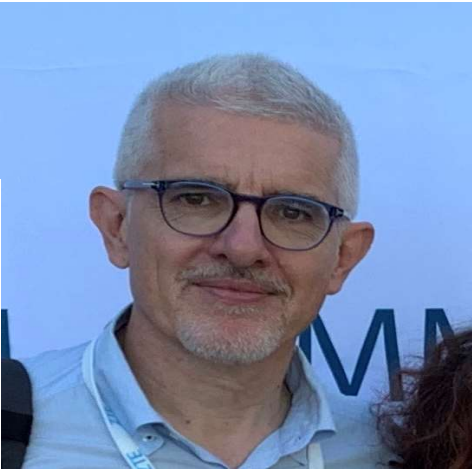
Pr. Pietro Manzoni

Pr. Pietro Manzoni

Title: Next-Gen IoT with Edge AI

The convergence of Artificial Intelligence and the Internet of Things (IoT) opens up a new era of intelligent edge devices, transforming sectors ranging from tourism and healthcare to smart cities. Edge AI is at the core of this evolution, which brings AI capabilities directly to devices operating at the network's edge, closer to where data is generated. This talk presents a key enabler of Edge AI called TinyML, which focuses on deploying machine learning models on ultra-low-power, resource-constrained devices. TinyML enhances energy efficiency, preserves privacy, and supports real-time, autonomous decision-making by enabling local, on-device data processing. Effective deployment in real-world IoT systems also demands robust connectivity and data integration mechanisms that efficiently operate over-constrained, low-bandwidth networks, ensuring seamless integration with lightweight messaging systems and edge-to-cloud pipelines. This talk will also address the architectural considerations and design patterns required to build reliable, scalable communication and data integration layers in constrained environments.

Biography

Pietro Manzoni is a Professor of Computer Engineering at the Universitat Politècnica de València (UPV), Spain. He received a master's degree in Computer Science from the Università degli Studi of Milan, Italy, in 1989, and a Ph.D. in Computer Science from the Politecnico di Milano, Italy, in 1995. From November 1992 to February 1993, he was an intern at Bellcore Labs, Red Bank, New Jersey, USA. From February 1994 to November 1994, he was a visiting researcher at the International Computer Science Institute (ICSI), Berkeley, California, USA.

His research has consistently focused on leveraging Mobile Wireless Networks to design dynamic and adaptive systems. Currently, his work concentrates on developing solutions for the Internet of Things (IoT), focusing on LPWAN technologies and publish/subscribe (Pub/Sub) communication models. These solutions are applied across various domains, including environmental intelligence and Smart Tourism services. He is especially interested in integrating TinyML-based approaches on resource-constrained devices to enable local, low-power intelligence at the edge. By pushing computational capabilities closer to the data sources, his research seeks to minimize energy consumption and network load while enhancing the autonomy of IoT deployments.

In addition, he investigates the challenges of ensuring seamless and efficient communication across the edgecloud continuum. His work focuses on strategies for distributed processing, adaptive orchestration, and connectivity management, facilitating scalable, resilient, and sustainable IoT systems that operate effectively between edge nodes and cloud infrastructures.

He values empirical research and places a strong emphasis on experimental validation. His methodology is grounded in developing, deploying, and testing working prototypes to rigorously evaluate system performance, scalability, and robustness under real-world conditions.

He currently coordinates the Computer Networks Research Group (GRC) (http://grc.webs.upv.es), is a senior member of the IEEE, and is an active member of the ACM SIGCAS - Computers and Society (https://www.sigcas.org/).


Pr. Lyes Khoukhi

Pr. Lyes Khoukhi

Title: Future Intelligent Vision for Securing Connected Networks

Connected networks play a central role in our digital life. However, ensuring trust in such networks remains one of the serious security hot topics because of the new nature of intelligent attacks. Recently, there has been a huge increase in the number of threats on critical connected networks/infrastructures (like V2X, IoT and 5G, Cloud, and Smart grids); these attacks continue to grow at a rapid rate and cause huge damage at both endusers and data/network operators sides. Several efforts have been conducted by both industry and academia to propose countermeasures solutions, but some of them still suffering from either non scalability or limitive risks hypotheses.

Our topic presents a new vision for securing connected networks including a set of behavioural-based models to mitigate attacks showing the need to cope with the new emerging threats, ranging from data leakage to collaborative attacks. Our vision to secure connected networks is not limited by the need of new attack patterns, but to adapt with the evolution of attacker approaches and threat patterns.

Biography

Lyes Khoukhi is Full Professor of cybersecurity at CNAM Paris University, France. He received the Ph.D degree in computer engineering from the University of Sherbrooke, Canada, in 2006. Between 2007 and 2008, he was a researcher with the University of Montreal in collaboration with Bell-Canada. In 2008, he also worked for Dialexia Corporation-Montreal, in the development of safe communications solutions. In 2009, he joined UTT -University of Technology of Troyes- as assistant professor, where he became Full professor at 2018. From 2020 to 2025, he was Full professor at ENSICAEN (Normandie University). Since September 2025, he joined, as Full Professor on Cybersecurity, CNAM Paris University (CEDRIC research Lab). His research interests include Cybersecurity for networks & attacks detection and prediction, malicious behaviours modelling, access control & security protocols, privacy and personal data protection, and networking. His target areas are IoT, V2X, 5G/6G, Fog/Cloud, and e-health. He has participated as a General chair or program chair of many conferences. He was the Program Chair of NTMS 2025, the Local chair for IEEE LCN 2024, IEEE ICC'23 IoTSN Symposium chair and general chair for LCN 2022. He also served as the program chair of LCN'21, the program co-chair of CyberWorlds'21 & LCN'20, and Symposium chair for IEEE LCN in 2019. He is also the Symposium chair of Globecom'21 MWN Symposium, co-chair of the IEEE LCN On-move for several years (2013-2018) and QoSQoE of IWCMC (2017-2019), and the general chair of NOTERE'16 (13ème Francophone conference, 2016), and UBIROADS'2012. He is the Guest Editor of several special issues, like Springer journal of Annals of Telecommunications of the SI (Internet of Vehicles & Smart City)-2020, about security and protocols issues in V2X. He is also the SIG leader of "Machine Learning for IoT and ad hoc networks" of the IoT ASHN ComSoc Committee of IEEE Communications Society since 2020.


Yacine Ghamri-Doudane

Pr. Yacine Ghamri-Doudane

Title: Large scale distributed sensing and data storage using CAVs : Turning vehicular networks into city-wide perception hubs

The growth in the number of mobile devices today result in an increasing demand for large amount of rich content to support numerous applications. It is however challenging for the current cellular networks to deal with such increasing demand, both in terms of cost and bandwidth that are necessary to handle the “massive” content generated and consumed by mobile users in an urban environment. This is partly due to the connection-centric nature of current mobile systems. Alternatively, the technological advancement in modern vehicles allow us to harness their computing, caching and communication capabilities to supplement infrastructure network while enabling numerous location-based services towards city smartification. It is now imaginable to recruit connected and autonomous vehicles (CAVs) to collect, store and share heterogeneous data on urban streets in order to provide citizens with a various set of such services. In this talk, our aim is to present some of our past results and future research directions on how to efficiently collect and store contents by and within the vehicles themselves in the vicinity of the consumers, aka the urban mobile user, while reducing bandwidth demand and cost. Hence, we will briefly discuss the necessity to define novel centrality metrics, based on the social interest of urban users, to identify and select the appropriate set of best candidate vehicles to perform urban data sensing and collection in a distributed way. Then, we show how complex networks principles and game-theoretic approaches can be leveraged in order to realize a social-aware data storage system to perform collaborative content caching in an urban environment. Discussing how such solutions, necessitating no infrastructure support, could allow novel usages at smart city’s scale will conclude the talk.

Biography

Yacine Ghamri-Doudane is currently Full Professor at the La Rochelle University in France, and the Director of its Laboratory of Informatics, Image and Interaction, L3i (~120 members + ~30 interns per year). Since January 2019, he also holds an Adjunct Professor position at the Walton Institute for Information and Communication Systems Science, South-East Technological University, SETU, Waterford, Ireland. Yacine received an engineering degree in computer science (M.Eng) from the National Institute of Informatics (INI), Algiers, Algeria, in 1998, an M.Sc. degree in signal, image and speech processing from the National Institute of Applied Sciences (INSA), Lyon, France, in 1999, a Ph.D. degree in computer networks from University Pierre & Marie Curie, Paris 6, France, in 2003, and a Habilitation to Supervise Research (HDR) in Computer Science from Université Paris-Est, in 2010.

His current research interests lay in the area of wireless networking and mobile computing with a current emphasis on topics related to the Internet of Things (IoT), Connected and Autonomous Vehicles, Edge Computing Systems, 5G and Beyond as well as Digital Trust. Yacine holds three (3) international patents and he authored or co-authored eight (8) book chapters, about 60 peer-reviewed international journal articles and about 200 peer-reviewed full conference and workshop papers. Since 1999, he participated or still participates to several national and European-wide research projects in his area of interests. Among them six regional research projects (two ongoing), six national-wide research projects (one ongoing), fourteen European-wide or International-wide research projects (two on-going) as well as three EU COST Actions. He also held several industrial funding with companies like Orange, Nokia, Renault, OODrive, Soft@Home (Orange Group) and PANGA. As part of his professional activities linked to the computer networking research community, Yacine also acts as the Chair of the IEEE Smart Cities Technical Community 2.0 Meetings and Conferences Committee since May 2022. He was also part of the IEEE Smart Cities Initiative Steering Committee from 2014 to 2017 as well as since 2022. He acted as the Chair of the IEEE Communications Society (ComSoc) Technical Committee on Information Infrastructure & Networking (TCIIN – previously TCII) from January 2010 till December 2013 and also chaired the IEEE ComSoc Humanitarian Communications Technologies Ad hoc Committee (HCTC) from January 2012 till December 2015. He is Member-at-Large of the IEEE ComSoc Globecom/ICC Technical Content (GITC) Standing Committee for the 2023-2024 term.

He is or had been an editorial board member of the IEEE TVT (ongoing), Elsevier JNCA, Elsevier ComNet, Springer AoT Journals, Wiley WCMC, Guest Editor of IEEE ComMag, IEEE IoT Journal, Springer/EURASIP WCN Journal, co-Editor in Chief of the Elsevier/KICS ICT Express Journal (ongoing) as well as the founding Editor-in-Chief of the IEEE ComSoc Ad Hoc and Sensor Network Technical Committee (AHSN TC) Newsletter. Among other conference involvements, he acted or is still currently acting as the TPC Chair of IEEE LatinCom 2022, IEEE MeditCom 2021, IEEE/IFIP IM 2021, and IEEE CCNC 2015, Symposium co-Chair in IEEE ICC 2009, 2010, 2012, 2018 and 2021 as well as IEEE GLOBECOM 2012 and 2015, Workshop co-Chair for IEEE GLOBECOM 2023, IEEE CloudNet 2024 and IEEE NOMS 2025, as well as Track co-Chair in IEEE CCNC 2023 and 2024 and in IEEE Sensors 2022 and 2023. He is a Senior Member of the IEEE. (CV & Bio: http://goo.gl/6wnUvJ)


Dr. Safia Djemame Zazoua

Dr. Safia Djemame Zazoua

Title: Quantum Computing and Artificial Intelligence: Synergies, Challenges, and the Future of Intelligent Systems"

Despite the significant advances currently being made in the field of artificial intelligence, this field continues to present various challenges and constraints, suchasthelargeamountofdatarequiredandtheinherentcomplexityinvolved, in addition to the current limitations of available resources. Among the strate- gies proposed to solve these problems is an innovative computing framework called “quantum computing”.

Synergies:Quantum computing helps accelerate complex processes and pro- cess big data using quantum algorithms such as HHL for linear algebra, Grover for search, and quantum machine learning for learning, while artificial intelli- gence helps improve quantum systems in the field of quantum error correction.

Challenges:Current quantum computers (NISQ) are limited by noise, low qubit counts, and high costs.Developing practical QML algorithms and encoding clas- sical data into quantum states remains complex.

Future:The convergence between quantum computing and artificial intelligence creates a new ideal bridge in the field of computing, in almost all areas.No- tably in the medical, financial, agricultural, and other fields via hybrid systems. These impacts are expected in the long term,with possible advances with in 5 to 10 years.

Key words: Quantum Computing , Artificial intelligence , Quantum algo- rithms , NISQ , Hybrid systems , Quantum Machine Learning

Biography

Dr. Safia Djemame Zazoua is senior associate professor and researcher in the Department of Computer Science at Setif1 University, Ferhat Abbas. She is a member of the Artificial Intelligence Laboratory and leads the research team entitled “Next-Gen AI Models and Applications.” Her research interests include quantum computing, artificial intelligence, image processing, optimization using bio-inspired algorithms, metaheuristics.. Her recent work focuses on the application of various quantum machine learning techniques for cancer detection, quantum image processing... Since september 2023, she is the coordinator of the National Thematic Network Master in Quantum Computing.


Program

Your browser cannot display the program directly. Click here to view or download the PDF.

Venue

Location: University Chadli Bendjedi, El Tarf, Algeria

Accommodation

Hôtel Paradis Palace – El Tarf

For reservation, please contact:
📞 +213 666 700 434 (WhatsApp)
📞 038 30 32 09
📞 039 31 40 87

Hôtel El Mehdi

📞 +213 698 800 002
📞 038 31 31 75
📧 hotel36elmehdi@gmail.com
📍 Route Nationale n°44, Aïn El Asal, El Tarf

Committees

Honorary Chairs

Pr. BENCHOHRA CHOUL; Rector University Chadli Bendjedi; El Tarf; Algeria

Conference Chair

Pr. N. Ghoualmi-Zine (Director of Networks and Systems Laboratory (LRS)) -Badji Moktar University, Annaba Algeria

Conference Co-Chairs

Dr. Abdelmadjid Benmachiche( University Chadli Bendjedi ; El Tarf ; Algeria)

Organizing Committee Chair

Dr. Locif Radouane University Chadli Bendjedi ; El Tarf ; Algeria

Dr. Chaouki. Chemmam University Chadli Bendjedi ; El Tarf ; Algeria

Pr. M. Derdour University of Oum El Bouaghi

Organizing Committee

Dr. Djeddai Touhami University Chadli Bendjedi ; El Tarf ; Algeria

Dr. Majda Maatallah University Chadli Bendjedi ; El Tarf ; Algeria

Dr. Tachouche University Chadli Bendjedi ; El Tarf ; Algeria

Dr. Imene Bouguerne University Chadli Bendjedi ; El Tarf ; Algeria

Dr. Riheb Benrouba University Chadli Bendjedi ; El Tarf ; Algeria

Sponsors Chairs

Dr. Betouil Abdelatif University Chadli Bendjedi ; El Tarf ; Algeria

Dr. Nafa Mehdi Badji Mokhtar university

Organization Committee - Doctoral Students

M. Boufaida Soundes Oumeima University Chadli Bendjedi ; El Tarf ; Algeria

M. Boutabia Ines. University Chadli Bendjedi ; El Tarf ; Algeria

M. Sedraoui Brahim el Khalil. University Chadli Bendjedi ; El Tarf ; Algeria

M. Benleulmi Maroua. University Chadli Bendjedi ; El Tarf ; Algeria

M. Khantouchi Ramzi. University Chadli Bendjedi ; El Tarf ; Algeria

M. Bahi Abderraouf. University Chadli Bendjedi ; El Tarf ; Algeria

M.ILyes Ahmim, University of Annaba, Algeria

Mme Amina Zeroual, University of Annaba, Algeria

Mme Ilhem Besnaci, University of Annaba, Algeria

M. Alaeddine Diaf University of Annaba, Algeria

Mme Sabrina Sakraoui University of Annaba, Algeria

M.Lokmane Heraguemi University of Annaba, Algeria

Web Chairs

Dr. Othmane Friha, University of Algiers, Algeria

Proceedings Editors

Dr. Abdelmajid Benmachiche University Chadli Bendjedi ; El Tarf ; Algeria

Pr. Makhlouf Derdour University of Oum El Bouaghi

Pr. Nassira Ghoualmi University of Annaba,Algeria

Dr. Ahmed Ahmim, University of Annaba, Algeria

Dr. Rahim Haiahem, University of Annaba,Algeria

Program Chairs

Dr. Chaouki. Chemmam University Chadli Bendjedi ; El Tarf ; Algeria

Dr. Ahmed Ahmim Souk Ahras University

Dr. Maatallah University Chadli Bendjedi ; El Tarf ; Algeria

Dr. Yasmine Labiod Annaba University

Dr. Haiahem Rahim Annaba University

Dr. Sara Namane Annaba University

IEEE Algeria Section

Pr. Abdallah kouzou, IEEE Senior Member, University of Djelfa, Algeria

Pr. Sofiane Karoui

Dr. Khalil Tamersit

Pr. Billel Attallah Msila university Algerian

Dr. Noureddine Chaib , IEEE Senior Member, Laghouat University, Algeria

Pr. Abdelghani Aissaoui

Technical Program Committee

Dr. Kahina Semar, Centre de Développement des Technologies Avancées - CDTA, Algeria

Dr. Nadia Zenati, Centre de Développement des Technologies Avancées - CDTA, Algeria

Dr. A.Oualid Djekoune, Centre de Développement des Technologies Avancées - CDTA, Algeria

Dr. Kahina Amara, Centre de Développement des Technologies Avancées - CDTA, Algeria

Dr. Oussama Kerdjidj, Centre de Développement des Technologies Avancées - CDTA, Algeria

Dr. Fellag Ratiba, Centre de Développement des Technologies Avancées - CDTA, Algeria

Dr. Gaham Mehdi, Centre de Développement des Technologies Avancées - CDTA, Algeria

Dr. Benbelkacem Samir, Centre de Développement des Technologies Avancées - CDTA, Algeria

Dr. Safia Benahmed, Centre de Développement des Technologies Avancées - CDTA, Algeria

Dr. Fouad Yacef, Centre de Développement des Technologies Avancées - CDTA, Algeria

Dr. Lamia Melkou, Centre de Développement des Technologies Avancées - CDTA, Algeria

Dr. Ibrahim Mezzah, Centre de Développement des Technologies Avancées - CDTA, Algeria

Dr. Yasmine Ghebghoub, Blida University, Algeria

Pr. Kamel Boukhalfa, National Higher School of Artificial Intelligence - NHSAI, Algeria

Dr. RahmaDjiroune, University Of Science And Technology Houari Boumediene - USTHB, Algeria

Dr. Derbal Khalissa, University Of Science And Technology Houari Boumediene - USTHB, Algeria

Pr. Samir Otmane , University of Paris-Saclay, France

Pr. Mehdi Ammi, University Paris 8, France

Pr. Chafiaa Hamitouche, IMT Atlantique, France

Pr. Kadi Bouatouch, University of Rennes 1, France

Dr. IbtissemGasmi, ChadliBendjedid University , Algeria

Dr. Majda Maatallah, ChadliBendjedid University, Algeria

Dr. Amina Makhlouf, ChadliBendjedid University , Algeria

Dr. Imene Bougaene, ChadliBendjedid University , Algeria

Dr. Assia, FerroumChadliBendjedid University, Algeria

Dr. Ali Abdelatif, ChadliBendjedid University, Algeria

Dr. Sassi,BentradChadliBendjedid University, Algeria

Pr. NaciraGhoualmi-Zine, Badji mokhtar University, Algeria

Dr. Ahmed Ahmim, Badji mokhtar University, Algeria

Dr. LakhdarLoukil, Oran University, Algeria

Dr. Amara Korba, Badji mokhtar University, Algeria

Dr. Ali-Abdelatif Betouil, Badji mokhtar University, Algeria

Dr. DjalelChefrour, Souk AhrasUniversity, Algeria

Dr. Nada Kherici, Badji Mokhtar University, Algeria

Dr. Ahmed Dib, Badji Mokhtar University, Algeria

Dr. Said Brahimi, University of Guelma, Algeria

Dr. AkramBoukhamla, Badji mokhtar University, Algeria

Dr. SaïdMahmoudi , University Of Mons, Belgium

Dr. Lamia Mahnane, Badji Mokhtar University, Algeria

Dr. Adel Alti, University of Setif, Algeria

Dr. Abdelaziz Amara Korba, Badji mokhtar University, Algeria

Dr. Babahenini Mohamed Chaouki, University of Biskra, Algeria

Dr. Nadia Zeghib, University of Constantine 2, Algeria

Dr. Zineddine Kouahla, University of Guelma, Algeria

Dr. Hayet Djellali, Badji Mokhtar University, Algeria

Dr. Ala Djeddai, University of Larbi Tebessi, Algeria

Dr. Mohammed Redjimi, University 20 August 1955, Algeria

Dr. MojtabaAlizadeh, Lorestan University, Iran

Dr. Djamila Hamdadou, Oran University, Algeria

Dr. Asma Saighi, Badji Mokhtar University, Algeria

Dr. NoriaTaghezout, Oran University, Algeria

Dr. Souad Guessoum, Badji mokhtar University Algérie, Algeria

Pr. AbdelouahabMoussaoui, Algeria

Dr. Abdelaziz Khadraoui, University of Geneva, Switzerland

Dr. Abdelhabib Bourouis, University of Oum El Bouaghi, Algeria

Dr. Amira Bendjeddou, Badji mokhtar University, Algeria

Dr. Nassima Aissani, Oran University, Algeria

Dr. Mohamed NadjibKouahla, Université de Guelma, Algeria

Dr. HomeroToral-Cruz, University of Quintana Roo - UQROO, Mexico

Dr. Noureddine Chikouche, University of M'sila, Algeria

Dr. Mustapha RedaSenouci, Ecole Militaire Polytechnique, Algeria

Dr. Sabri Ghazi, Badji mokhtar University, Algeria

Dr. Brahim Farou, Université de Guelma, Algeria

Dr. Hafad Zarzour, University of Souk Ahras, Algeria

Dr. Mohamed Amine Ferrag, Guelma University, Algeria

Dr. Salim Bitam, University of Biskra, Algeria

Dr. Yacine Challal, University of Doha for Science and Technology, Qatar

Dr. Baghdad Atmani, Oran University, Algeria

Dr. Abou El Hassan Benyamina, Oran University, Algeria

Dr. Philippe Roose, University of Pau, France

Dr. Kahya Noudjoud, University Badji Mokhtar Annaba, Algeria

Dr. Rabah Rahal, Algeria, Algeria

Dr. Nadjia Benblidia, Blida University, Algeria

Dr. NabihaAzizi , Badji Mokhtar University , Algeria

Dr. Wan Hassan , MJIIT, UTM KL

Dr. Fethi Amara, University Badji Mokhtar Annaba, Algeria

Dr. Nour Elislem Karabadji, University Badji Mokhtar Annaba, Algeria

Dr. Nasreddine Kouadria, University Badji Mokhtar Annaba, Algeria

Dr. Mohamed Amine Boudia, University of Saida, Algeria

Dr. Zahia Guessoum, Université de Paris 6, France

Dr. Okba Kazar, University of Kalba, Sharjah, UAE

Dr. Abdelmajid Benmachiche, Badji mokhtar University, Algeria

Pr. El-Bay Bourennane, University of Burgundy, France

Dr. Roumaissa Khelf, Badji mokhtar University, Algeria

Dr. Nasreddine Lagraa, University of Laghouat, Algeria

Dr. Khelifa Benahmed, University of Bechar, Algeria

Dr. Marwa Ahmim, Badji Mokhtar University, Algeria

Dr. Amer Zerek, Al Zawiya University, Libya

Dr. El AbbassiaDeba, Badji Mokhtar University, Algeria

Dr. Hamid Seridi, Université 08 mai 45 Guelma, Algeria

Dr. YahiaLebbah, Oran University, Algeria

Pr. Omar Boussaid, Université Lumière-Lyon-II, France

Dr. Sara Namane, Badji Mokhtar University, Algeria

Dr. Samia Chikhi, University of Constantine 2, Algeria

Pr KECHAR Bouabdellah, University of Oran 1 Ahmed Benbella, Algeria

Dr. AnisBey, University of Paul Sabatier, France

Dr. Hayet Merouani, Badji mokhtar University, Algeria

Dr. Hamou Reda Mohamed, University of Saïda, Algeria

Dr. EerkeBoiten, Montfort University, United Kingdom

Dr. Hassina Aliane, CERIST, Algeria

Dr. Saad Harous, University of Sharjah, United Arab Emirates

Dr. GhalemBelalem, Oran University, Algeria

Dr. Idir Amine Amarouche, University Of Science And Technology Houari Boumediene - USTHB, Algeria

Dr. Mohamed Raouf Habes, University of Badji Mokhtar, Algeria

Dr. Abdelkrim Bouramoul, University of Constantine2, Algeria

Dr. Toufik Benouhiba, Badji mokhtar University, Algeria

Dr. Amine Khaldi, Ouargla University, Algeria

Dr. MaazouziFaiz, University of Badji Mokhtar, Algeria

Dr. Salem Benferhat, Artois University , France

Dr. Mohamed Said, Badji mokhtar University, Algeria

Dr. Mehdi Mendjel, Badji mokhtar University, Algeria

Dr. Hocine Bourouba, University of guelma, Algeria

Dr. LeandrosMaglaras, Montfort University, United Kingdom

Dr. Kenza Bozed, University of Benghazi, Libya

Dr. Nilanjan Dey, JIS University, India

Dr. Makhlouf Derdour, University of Oum El Bouaghi, Algeria

Dr. Tahar Bouhadada, Badji mokhtar University, Algeria

Dr. Boudjit Saadi, University of Paris 13, France

Dr. Abdelmalek Amine, Tahar Moulay University of Saida, Algeria

Dr. Abdelkrim Meziane, Centre de Recherche sur l'Information Scientifique et Technique, Algeria

Dr. Ladjel Bellatreche, National Engineering School for Mechanics and Aerotechnics - ENSMA, France

Dr. Nadjet Kamel, University Ferhat Abbes Setif1, Algeria

Dr. Fatma Zohra Bessai-Mechmache, Research Centre on Scientific and Technical Information - CERIST, Algeria

Dr. Yamine Ait Ameur, University of Toulouse, France

Dr. Brij Gupta, National Institute of Technology Kurukshetra, India

Dr. Haikal El Abed, TechnischeUniversitätBraunschweig, Germany

Dr. ShahinGelareh, Portsmouth Business School, United Kingdom

Dr. Mohamed Amine Yakoubi, Badji mokhtar University, Algeria

To be completed
Conference Tracks

Quantum Computing and its Applications

Quantum Algorithms (QALG):

  • Quantum information science
  • Quantum algorithm structures and patterns
  • Quantum algorithms and complexity
  • New NISQ-friendly algorithms
  • Error correction and mitigation algorithms
  • Fault-tolerant quantum algorithms
  • Advances in hybrid variational algorithms
  • Advances in hybrid QAOA algorithms
  • New quantum solver approaches
  • Quantum linear algebra
  • Advances in tensor network algorithms
  • Advances in encoding and learning algorithms
  • Advances in Hamiltonian dynamics
  • Quantum cryptography
  • Secure quantum computing
  • Privacy-preserving quantum computing

Quantum Applications (QAPP):

  • Towards Quantum advantage
  • Towards fault tolerance and realization of quantum error correction at application level
  • Quantum Machine Learning (QML) applications
  • NISQ and fault-tolerant applications
  • Quantum simulation of physical systems
  • Applications — chemistry, machine learning, finance, optimization, biological sciences, and other science & engineering applications
  • Applications of quantum annealing
  • Quantum for generative AI
  • Integrated high-performance computing (HPC) and quantum applications
  • Performance evaluation of quantum algorithms
  • Optimization problems — transportation, supply chain & logistics
  • Quantum AI & decision making
  • Quantum medical applications & precision health applications
  • Quantum DNA and protein sequencing
  • Quantum finance

Quantum Photonics (QPHO):

  • Quantum photonic information science and technology
  • Quantum computing with photonic systems
  • Quantum entanglement and teleportation
  • Optical quantum computing
  • Photonic quantum technologies
  • Photonic quantum computers
  • Integrated quantum photonics
  • Photonics-based qubit technologies
  • Photonic quantum simulation
  • Silicon photonic devices
  • Photon sources and detectors
  • Quantum sensing and metrology

Quantum Software (QSW):

  • Full quantum software stack: compilers, runtimes, workflows, languages, transpilers, profilers
  • Quantum programming, development kits (QDKs), test harnesses, debuggers
  • Quantum languages and intermediate representations (IRs)
  • Quantum simulators
  • Quantum software engineering
  • Generative AI in quantum software development and systems software
  • Software for co-design
  • Hybrid quantum-classical systems
  • Resource estimation
  • Quantum control software
  • Interfacing classical control and quantum hardware through software
  • Error correction and mitigation
  • Fault-tolerant computing at the system software level
  • Testing, validation, and verification of quantum programs and systems
  • Benchmarking of quantum systems, quantum volume and other metrics
  • Software techniques for error correction and noise mitigation
  • Hardware-software stacks for error mitigation
  • Quantum software in enterprise systems
  • Secure quantum systems
  • Privacy-preserving quantum systems

Quantum Technologies and Systems Engineering (QTEM):

  • Superconducting quantum technologies
  • Quantum annealing technologies
  • Trapped ion quantum technologies
  • Silicon quantum technologies
  • Quantum dot technologies
  • Neutral atom quantum technologies
  • Topological quantum technologies
  • Hardware-software stack for quantum annealers, trapped ions, superconducting, photonics, neutral atoms, and others
  • Quantum characterization, verification & validation: benchmarking and tomography
  • Qubit design and control
  • Packaging and cooling
  • Cryogenics
  • Quantum electronics
  • Pulse-level control of qubits
  • Sensing and metrology
  • Characterization and hardware mitigation of noise, state preparation and measurement errors

Quantum Machine Learning (QML):

  • Quantum algorithms for machine learning tasks
  • AI-assisted quantum information science
  • Quantum-enhanced machine learning
  • Quantum-inspired models and machine learning
  • Quantum Boltzmann Machines
  • Quantum Neural Networks (QNNs)
  • Quantum Support Vector Machines (QSVMs)
  • Quantum Generative Adversarial Networks (QGANs)
  • Quantum Generative AI
  • Training machine learning models
  • Quantum algorithms for reinforcement learning
  • Quantum clustering and classification
  • Advances in encoding and learning algorithms
  • Benchmarking of quantum systems, quantum volume and other metrics
  • Quantum machine learning theory
  • Quantum error correction and mitigation
  • Fault-tolerant QML applications
  • Quantum state tomography
  • Quantum machine learning applications
  • QML software and libraries
  • QML benchmarks

Networking and Next-generation Networks

Virtual, Augmented and Mixed Reality

Security and Privacy

Applied Artificial Intelligence

Contact

Dr. Abdelmadjid Benmachiche, University Chadli Bendjedid El Tarf Algeria
benmachiche-abdelmadjid@univ-eltarf.dz

Pr. Nassira Ghoualmi-Zine, University of Annaba, Algeria
nacira.ghoualmi@univ-annaba.net
ghoualmi@lrs-annaba.net