8th International Conference on Networking and Advanced Systems

ICNAS'2026

Date: November 4-5, 2026

Venue: Badji Mokhtar University, Annaba, Algeria

Mode: Hybrid (In-person and Virtual)

CALL FOR PAPERS - ICNAS'26

We invite researchers and practitioners to submit their original research papers related to the conference tracks. The submission should present novel perspectives within the general scope of the conference.

All submitted papers will be peer-reviewed by at least three reviewers from the Technical Program Committee to ensure quality and relevance to the conference topics.

Authors of accepted papers will be invited to present their work at the conference.

About

The eighth edition of the conference, ICNAS 2026, is a scientific event that brings together scientific expertise from several areas of research. This biennial conference is the successor of ICNAS 2013, ICNAS 2015, ICNAS 2017, ICNAS 2019, ICNAS 2021, ICNAS 2023, and ICNAS 2025. The areas of interest of ICNAS 2026 include a cross between different research themes.

The conference is conducted in hybrid mode (in-person and virtual) and deals with topics relating to networking, management, and advanced systems — systems that are advanced by their design, implementation, and applications. E-learning applications across domains such as industry and education help promote Artificial Intelligence, while the need to secure data and systems makes cybersecurity, Quantum Computing, and intelligent systems central themes of ICNAS'2026.

Main Tracks

  • Quantum Computing and its Applications
  • Networking and Next-generation Networks
  • Virtual, Augmented and Mixed Reality
  • Security and Privacy
  • Applied Artificial Intelligence

Technical Sponsors

Important Dates

Paper submission deadline: 30 July 2026

Notification of acceptance: 30 September 2026

Camera-Ready Submission: 10 October 2026

Conference dates: November 4-5, 2026

Submit

Author Guidelines

Authors are invited to submit original, unpublished work that is not currently under review elsewhere. Submissions must follow the provided formatting instructions carefully. Papers should clearly present research contributions and emphasize their significance. Authors are responsible for ensuring the quality, clarity, and originality of their submissions.

Submission Guidelines

  • All submissions must be made electronically via the Microsoft CMT platform
  • Submissions should comply with the required format (PDF format, specific templates if applicable)
  • Papers exceeding the maximum page limit or failing to meet formatting requirements may be rejected without review
  • Ensure that all authors and affiliations are correctly listed

Where to Submit

All submissions must be made through the official Microsoft CMT submission site:

ICNAS 2026 CMT Submission Portal

How to Submit

  1. Visit the Microsoft CMT submission site
  2. Log in or create an account if you don't have one
  3. Select the appropriate track or category for your submission
  4. Fill in all required metadata (title, abstract, authors, etc.)
  5. Upload your paper in PDF format, following the submission checklist
  6. Confirm your submission and retain the confirmation email

Publication Information

All accepted and presented papers will be published in the conference proceedings with an  ISBN (to be defined). Further publication details and indexing will be announced.

CMT Acknowledgment

The Microsoft CMT service was used for managing the peer-reviewing process for this conference. This service was provided for free by Microsoft and they bore all expenses, including costs for Azure cloud services as well as for software development and support.

Registration Fees

Registration fee information will be announced soon. For inquiries, please contact the conference organizers.

Keynotes

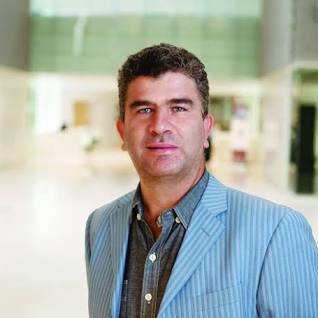
Prof. Amine Bermak

Prof. Amine Bermak

Title: Extreme Edge Intelligence: Moving Artificial Intelligence closer to Sensors

Biography

Prof. Amine Bermak received the Masters and PhD degrees, both in electrical and electronic engineering, from Paul Sabatier University, Toulouse, France in 1994 and 1998, respectively. He has held many positions in various continents including full Professor at HKUST Hong Kong, Senior lecturer at Edith Cowan University Australia and a Post-doc at York University, England in a project funded by British Aerospace. He is currently a Distinguished Professor and Associate Dean at the College of Science and Engineering (CSE), Hamad Bin Khalifa University, Qatar.

Prof. Bermak has made fundamental and seminal contributions that range from theory, circuit design techniques, and applications to working systems in the areas of ultra-low power sensory systems, applied to vision, olfaction, temperature sensors, wearable devices and AI systems. He is the recipient of 6 best paper awards and the winner of the 2011 Michael G. Gale Medal for distinguished teaching at HKUST and the "Engineering School Teaching Excellence Award". He is the recipient of the best researcher award at CSE in 2019 and best innovator award at HBKU in 2022; the service excellence award at HBKU in 2023 and research excellence award at HBKU in 2024.

Prof. Bermak has 13 patents and over 500 articles in journals, book chapters and conference proceedings. He has supervised and graduated 38 PhD and 34 MSc students and designed with his students over 50 VLSI chips. He has been very actively involved in many research and industrial projects in collaboration with Motorola-France, TI, Intel, 3D plus-France, British Aerospace-UK, Intelligent Pixel Inc. – USA, ASTRI-Hong Kong; with a research grant portfolio of over 20M USD.

He has served on the editorial board of IEEE Transactions on Very Large-Scale Integration (VLSI) Systems and IEEE Transactions on Circuits and Systems II, IEEE Transactions on Biomedical Circuits and Systems, IEEE Transactions on Electron Devices, and Nature Scientific Reports. He was the general chair of numerous international conferences such as IEEE BioCAS 2009, IEEE Delta 2010 and IEEE ICM 2024. Prof. Bermak was the co-director of the MIT-HKUST Consortium. He is an IEEE Distinguished Lecturer, a Fellow of AAIA and a Fellow of IEEE. He is also the chair of HBKU University Senate.


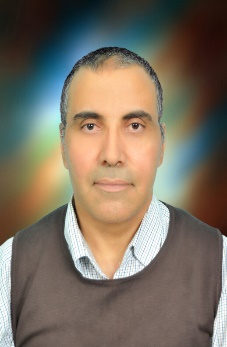
Prof. Imed Ben Dhaou

Prof. Imed Ben Dhaou

Title: To Be Announced

Biography

Prof. Imed Ben Dhaou received his Ph.D. from the Royal Institute of Technology, Sweden, and is currently a Full Professor of Embedded Systems for IoT at the Department of Computer Science, Dar Al-Hekma University, and a Docent at the Department of Computing, University of Turku, Finland. He has authored over 120 publications, including journal articles, conference papers, book chapters, and technical reports, with research interests in embedded systems, IoT, and related technologies.

Recognized among the top 2% of scientists worldwide by Stanford and Elsevier, he has received several awards, such as the Best Paper Award at the 1997 Finnish Symposium on Signal Processing, a DAC travel grant (2000), a Publication Award from Qassim University, the Dr. Hussein Mohammed Al-Sayyed Award for Research, and the Community Service Award from Dar Al-Hekma University.

A member of Sigma Xi, he has served as an editor for Microelectronics Journal (Elsevier) since 2014 and as a guest editor for ISI journals, including Electronics, Journal of Cloud Computing, Analogue Integrated Circuits and Signal Processing, and Microprocessors and Microsystems, alongside chairing technical committees at various conferences. He is also the editor of the upcoming book IoT-Enabled DC Microgrids: Architecture, Algorithms, Applications, and Technologies, to be published by CRC Press in 2025.


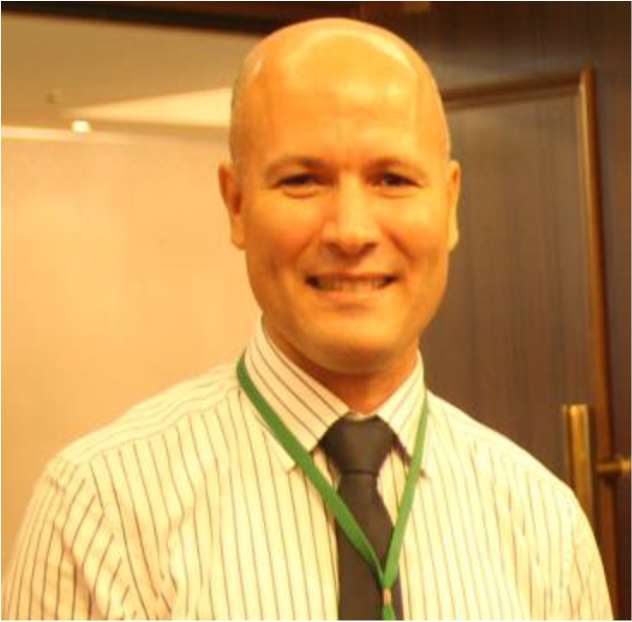
Prof. Tarek Gaber

Prof. Tarek Gaber

PhD in Computer Science (Information Security)

Professor at Suez Canal University, Egypt (on leave) · Senior Lecturer (Associate Professor) at University of Salford, UK · Honorary Lecturer at University of Liverpool, UK

Title: To Be Announced

Biography

Prof. Tarek Gaber is a Professor at Suez Canal University, Egypt (on leave), and a Senior Lecturer at the University of Salford, UK. He is the Winner of the Developing Cutting Edge Creativity and Innovative Practice Award 2025 (University of Salford, UK) and Winner of the Highest Impact Citation Award 2024 (Suez Canal University, Egypt). He is ranked #1 in Computer Science at the University of Salford (AD Scientific Index 2024 & 2025) and is included in the world's top 2% of scientists by Stanford University (2024 & 2025). He is also a Best Paper Award Winner.

Prof. Gaber has authored 100+ publications, and has led, co-led, and co-investigated projects worth £7M+. He is a frequent keynote speaker and an Associate Editor in Q1 journals. His expertise lies in AI and cybersecurity, with a strong focus on impactful research and innovative solutions at the intersection of Cybersecurity and AI.

Contact: Tgaber@liverpool.ac.uk · Tmgaber@gmail.com


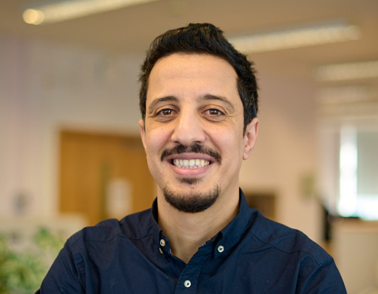
Dr Mohamed Chahine Ghanem

Dr Mohamed Chahine Ghanem

Associate Professor and Cyber Security Research Lead at Keele University

Visiting Associate Professor in Cyber Security and AI at the University of Liverpool, UK

Title: Securing the Cyber-Physical Frontier: Security and Resilience for OT and Advanced Networked Systems in the Age of AI

Abstract

Operational Technology has moved from the air-gapped margins of industrial automation to the centre of the global threat landscape. IT/OT convergence, driven by Industry 4.0 and the Industrial Internet of Things, has dissolved the perimeter protecting the systems that power, move and water our societies. The consequences are stark: record ICS vulnerability disclosures, a doubling of ransomware against industrial organisations, purpose-built malware exploiting insecure-by-design protocols, and state actors pre-positioning inside critical infrastructure. This keynote examines the evolving OT threat landscape and the structural challenges of convergence and legacy protocols, before turning to defence: AI-driven anomaly and intrusion detection for IIoT, zero-trust architectures adapted to OT constraints, resilience-by-design, and the maturing governance landscape of IEC 62443, NIST CSF 2.0 and NIS2. It concludes with digital forensics, incident response in industrial settings, and a research agenda for resilient cyber-physical systems.

Biography

Dr Mohamed Chahine Ghanem is an Associate Professor and Cyber Security Research Lead at Keele University, and a Visiting Associate Professor in Cyber Security and AI within the School of Computer Science and Informatics at the University of Liverpool. Dr Ghanem retains a Senior Advisor position in Cyber Resilience in the banking sector. Before joining academia, Dr Ghanem earned solid industry experience with over 15 years of practice in senior positions in law enforcement and corporations, including as global cyber security auditing director for Kroll LLC and Nationwide bank. Dr Ghanem holds an Engineering Degree in Computer Systems from EMP/Algeria, an MSc in Digital Forensics & IT Security and a PhD in Cyber Security Engineering from City, University of London. Dr Ghanem is a Senior Fellow of the HEA (SFHEA) and holds an MA in Academic Practice, and has earned many reputable certificates, such as CISSP, CPCI, multi-GIAC certificates and Digital Forensics ACE & XRY.

Dr Ghanem is currently leading a research project in applied AI for Cyber Security as well as supervising research students on topics related to digital forensics, IoT, offensive cyber security and applied AI, and has published numerous research papers in Q1 journals. Dr Ghanem is the Editor-in-Chief of the Journal of Cyber Security and Risk Auditing (Q1), an Editor with the ACM Digital Threats: Research and Practice journal, and a Guest Editor and Reviewer for many top cybersecurity venues, including JCP, IEEE TIFS and Elsevier Computers & Security.


Venue

Location: Badji Mokhtar University, Annaba, Algeria

Additional venue details (rooms, directions, transportation) will be announced closer to the conference dates.

Accommodation

Accommodation information and recommended hotels in Annaba will be announced soon.

Committees

Honorary Chairs

Pr. Mohamed Mana, Badji Mokhtar University, Algeria

Conference Chair

Pr. N. Ghoualmi-Zine (Director of the Networks and Systems Laboratory (LRS)) — Badji Mokhtar University, Annaba, Algeria, IEEE Senior Member

Organizing Committee Chair

Pr. Samir Benmoussa, Dean of Technology Faculty, Badji Mokhtar University

Organizing Committee

Pr. N. Ghoualmi-Zine, Badji Mokhtar University

Dr. Nafa Mehdi, Badji Mokhtar University

Dr. Rahal Rabah, Badji Mokhtar University

Dr. Haiahem Rahim, Badji Mokhtar University

Dr. Labiod Yasmine, Badji Mokhtar University

Dr. Imed Semassel, Badji Mokhtar University

Dr. Sara Namane, Badji Mokhtar University

Dr. Hakima Khelifi, Badji Mokhtar University

Dr. Salima Yahiouche, Badji Mokhtar Annaba University

Organization Committee — Doctoral Students

Djazira Hayet, Badji Mokhtar University

Elyes Ahmim, Badji Mokhtar University

Roumaissa Khelf, Badji Mokhtar University

Web Chairs

Dr. Othmane Friha, University of Algiers, Algeria

Program Chairs

Pr. Hafidi Mohammed, Badji Mokhtar University

MCA. Amira Bendjedou, Badji Mokhtar University

Publication Chairs

Dr. Yahiouche Salima, Badji Mokhtar University

MCA. Marwa Ahmim, Badji Mokhtar University

Pr. N. Ghoualmi-Zine, Badji Mokhtar University


Program Committee Members

Pr. Zahia Guessoum, Université de Paris 6, France

Pr. Yasmine Ghebghoub, Blida University, Algeria

Pr. Yamine Ait Ameur, University of Toulouse, France

Pr. Yacine Challal, University of Doha for Science and Technology, Qatar

Pr. Wan Hassan, MJIIT, UTM KL, Malaysia

Pr. Tahar Bouhadada, Badji Mokhtar University, Algeria

Pr. Soudous El Hammami, Carthage University, Tunisia

Pr. Samir Otmane, University of Paris-Saclay, France

Pr. Salim Bitam, University of Biskra, Algeria

Pr. Salem Benferhat, Artois University, France

Pr. Saïd Mahmoudi, University of Mons, Belgium

Pr. Saad Harous, University of Sharjah, United Arab Emirates

Pr. Philippe Roose, University of Pau, France

Pr. Omar Boussaid, Université Lumière-Lyon-II, France

Pr. Okba Kazar, University of Kalba, Sharjah, UAE

Pr. Noria Taghezout, Oran University, Algeria

Pr. Nilanjan Dey, JIS University, India

Pr. Nasreddine Lagraa, University of Laghouat, Algeria

Pr. Nadjia Benblidia, Blida University, Algeria

Pr. Nadjet Kamel, University Ferhat Abbes Setif 1, Algeria

Pr. Nadia Zeghib, University of Constantine 2, Algeria

Pr. Nacira Ghoualmi-Zine, Badji Mokhtar University, Algeria

Pr. Mustapha Reda Senouci, Ecole Militaire Polytechnique, Algeria

Pr. Mojtaba Alizadeh, Lorestan University, Iran

Pr. Mohammed Redjimi, University 20 August 1955, Algeria

Pr. Mohammed Hafidi, Badji Mokhtar University, Algeria

Pr. Mehdi Ammi, University Paris 8, France

Pr. Makhlouf Derdour, University of Oum El Bouaghi, Algeria

Pr. Maazouzi Faiz, University of Souk Ahras, Algeria

Pr. Leandros Maglaras, Montfort University, United Kingdom

Pr. Lamia Mahnane, Badji Mokhtar University, Algeria

Pr. Ladjel Bellatreche, National Engineering School for Mechanics and Aerotechnics — ENSMA, France

Pr. Khoukhi Elyes, CNAM-Paris, France

Pr. Khelifa Benahmed, University of Bechar, Algeria

Pr. Kenza Bozed, University of Benghazi, Libya

Pr. Kamel Boukhalfa, National Higher School of Artificial Intelligence, Algeria

Pr. Kadi Bouatouch, University of Rennes 1, France

Pr. Imed El Dahou, Dar El Hikma University, Saudi Arabia

Pr. Idir Amine Amarouche, University of Science and Technology Houari Boumediene — USTHB, Algeria

Pr. Hamou Reda Mohamed, University of Saïda, Algeria

Pr. Hala Bezine, Sfax University, Tunisia

Pr. Haikal El Abed, Technische Universität Braunschweig, Germany

Pr. Hafad Zarzour, University of Souk Ahras, Algeria

Pr. Ghalem Belalem, Oran University, Algeria

Pr. El-Bay Bourennane, University of Burgundy, France

Pr. Djamila Hamdadou, Oran University, Algeria

Pr. Chafiaa Hamitouche, IMT Atlantique, France

Pr. Brahim Farou, Université de Guelma, Algeria

Pr. Boudjit Saadi, University of Rennes, France

Pr. Baghdad Atmani, Oran University, Algeria

Pr. Babahenini Mohamed Chaouki, University of Biskra, Algeria

Pr. Azedine Babahenini, Biskra University, Algeria

Pr. Ahmed Ahmim, Souk Ahras University, Algeria

Pr. Adel Alti, University of Setif, Algeria

Pr. Abdelouahab Moussaoui, Setif University, Algeria

Pr. Abdelmalek Amine, Tahar Moulay University of Saida, Algeria

Pr. Abdelkrim Bouramoul, University of Constantine 2, Algeria

Pr. Abdelhabib Bourouis, University of Oum El Bouaghi, Algeria

Pr. Abdelaziz Khadraoui, University of Geneva, Switzerland

Pr. Kechar Bouabdellah, University of Oran 1 Ahmed Benbella, Algeria

Dr. Zineddine Kouahla, University of Guelma, Algeria

Dr. Yahia Lebbah, Oran University, Algeria

Dr. Shahin Gelareh, Portsmouth Business School, United Kingdom

Dr. Sassi Bentrad, Cybersecurity School, Algeria

Dr. Sara Namane, Badji Mokhtar University, Algeria

Dr. Safia Benahmed, Centre de Développement des Technologies Avancées, Algeria

Dr. Sabri Ghazi, Badji Mokhtar University, Algeria

Dr. Roumaissa Khelf, Badji Mokhtar University, Algeria

Dr. Rahma Djiroune, University of Science and Technology Houari Boumediene — USTHB, Algeria

Dr. Rabah Rahal, Algeria

Dr. Oussama Kerdjidj, Centre de Développement des Technologies Avancées, Algeria

Dr. Noureddine Chikouche, University of M'sila, Algeria

Dr. Nour Elislem Karabadji, University Badji Mokhtar Annaba, Algeria

Dr. Nassima Aissani, Oran University, Algeria

Dr. Nasreddine Kouadria, University Badji Mokhtar Annaba, Algeria

Dr. Nadia Zenati, Centre de Développement des Technologies Avancées — CDTA, Algeria

Dr. Nada Kherici, Badji Mokhtar University, Algeria

Dr. Mohamed Said, Badji Mokhtar University, Algeria

Dr. Mohamed Nadjib Kouahla, Université de Guelma, Algeria

Dr. Mohamed Amine Yakoubi, Badji Mokhtar University, Algeria

Dr. Mohamed Amine Ferrag, EL AIN University, UAE

Dr. Mohamed Amine Boudia, University of Saida, Algeria

Dr. Mehdi Mendjel, Badji Mokhtar University, Algeria

Dr. Marwa Ahmim, Badji Mokhtar University, Algeria

Dr. Majda Maatallah, Chadli Bendjedid University, Algeria

Dr. Lamia Melkou, Centre de Développement des Technologies Avancées, Algeria

Dr. Lakhdar Loukil, Oran University, Algeria

Dr. Kahya Noudjoud, University Badji Mokhtar Annaba, Algeria

Dr. Kahina Semar, Centre de Développement des Technologies Avancées — CDTA, Algeria

Dr. Kahina Amara, Centre de Développement des Technologies Avancées — CDTA, Algeria

Dr. Jamel Bektache, Souk Ahras University, Algeria

Dr. Ibtissem Gasmi, Chadli Bendjedid University, Algeria

Dr. Ibrahim Mezzah, Centre de Développement des Technologies Avancées, Algeria

Dr. Homero Toral-Cruz, University of Quintana Roo — UQROO, Mexico

Dr. Hocine Bourouba, University of Guelma, Algeria

Dr. Hayette Djellali, Badji Mokhtar University, Algeria

Dr. Hayet Djellali, Badji Mokhtar University, Algeria

Dr. Hassina Aliane, CERIST, Algeria

Dr. Gaham Mehdi, Centre de Développement des Technologies Avancées, Algeria

Dr. Fouad Yacef, Centre de Développement des Technologies Avancées, Algeria

Dr. Fethi Amara, University Badji Mokhtar Annaba, Algeria

Dr. Fellag Ratiba, Centre de Développement des Technologies Avancées — CDTA, Algeria

Dr. Fatma Zohra Bessai-Mechmache, Research Centre on Scientific and Technical Information — CERIST, Algeria

Dr. El Abbassia Deba, Badji Mokhtar University, Algeria

Dr. Eerke Boiten, Montfort University, United Kingdom

Dr. Djalel Chefrour, Souk Ahras University, Algeria

Dr. Derbal Khalissa, University of Science and Technology Houari Boumediene — USTHB, Algeria

Dr. Brij Gupta, National Institute of Technology Kurukshetra, India

Dr. Benbelkacem Samir, Centre de Développement des Technologies Avancées, Algeria

Dr. Asma Saighi, Oum El Bouaghi University, Algeria

Dr. Anis Bey, University of Paul Sabatier, France

Dr. Amira Bendjeddou, Badji Mokhtar University, Algeria

Dr. Amine Khaldi, Ouargla University, Algeria

Dr. Amer Zerek, Al Zawiya University, Libya

Dr. Akram Boukhamla, Ouargla University, Algeria

Dr. Ahmed Dib, Badji Mokhtar University, Algeria

Dr. Abou El Hassan Benyamina, Oran University, Algeria

Dr. Abdelkrim Meziane, Centre de Recherche sur l'Information Scientifique et Technique, Algeria

Dr. A. Oualid Djekoune, Centre de Développement des Technologies Avancées, Algeria
Conference Tracks

ICNAS'2026 welcomes original contributions across the following tracks:

Quantum Computing and its Applications

Quantum Algorithms (QALG)

  • Quantum information science
  • Quantum algorithm structures and patterns
  • Quantum algorithms and complexity
  • New NISQ-friendly algorithms
  • Error correction and mitigation algorithms
  • Fault-tolerant quantum algorithms
  • Advances in hybrid variational algorithms
  • Advances in hybrid QAOA algorithms
  • New quantum solver approaches
  • Quantum linear algebra
  • Advances in tensor network algorithms
  • Advances in encoding and learning algorithms
  • Advances in Hamiltonian dynamics
  • Quantum cryptography
  • Secure quantum computing
  • Privacy-preserving quantum computing

Quantum Applications (QAPP)

  • Towards Quantum advantage
  • Towards fault tolerance and realization of quantum error correction at application level
  • Quantum Machine Learning (QML) applications
  • NISQ and fault-tolerant applications
  • Quantum simulation of physical systems
  • Applications — chemistry, machine learning, finance, optimization, biological sciences, and other science & engineering applications
  • Applications of quantum annealing
  • Quantum for generative AI
  • Integrated high-performance computing (HPC) and quantum applications
  • Performance evaluation of quantum algorithms
  • Optimization problems — transportation, supply chain & logistics
  • Quantum AI & decision making
  • Quantum medical applications & precision health applications
  • Quantum DNA and protein sequencing
  • Quantum finance

Quantum Photonics (QPHO)

  • Quantum photonic information science and technology
  • Quantum computing with photonic systems
  • Quantum entanglement and teleportation
  • Optical quantum computing
  • Photonic quantum technologies
  • Photonic quantum computers
  • Integrated quantum photonics
  • Photonics-based qubit technologies
  • Photonic quantum simulation
  • Silicon photonic devices
  • Photon sources and detectors
  • Quantum sensing and metrology

Quantum Software (QSW)

  • Full quantum software stack: compilers, runtimes, workflows, languages, transpilers, profilers
  • Quantum programming, development kits (QDKs), test harnesses, debuggers
  • Quantum languages and intermediate representations (IRs)
  • Quantum simulators
  • Quantum software engineering
  • Generative AI in quantum software development and systems software
  • Software for co-design
  • Hybrid quantum-classical systems
  • Resource estimation
  • Quantum control software
  • Interfacing classical control and quantum hardware through software
  • Error correction and mitigation
  • Fault-tolerant computing at the system software level
  • Testing, validation, and verification of quantum programs and systems
  • Benchmarking of quantum systems, quantum volume and other metrics
  • Software techniques for error correction and noise mitigation
  • Hardware-software stacks for error mitigation
  • Quantum software in enterprise systems
  • Secure quantum systems
  • Privacy-preserving quantum systems

Quantum Technologies and Systems Engineering (QTEM)

  • Superconducting quantum technologies
  • Quantum annealing technologies
  • Trapped ion quantum technologies
  • Silicon quantum technologies
  • Quantum dot technologies
  • Neutral atom quantum technologies
  • Topological quantum technologies
  • Hardware-software stack for quantum annealers, trapped ions, superconducting, photonics, neutral atoms, and others
  • Quantum characterization, verification & validation: benchmarking and tomography
  • Qubit design and control
  • Packaging and cooling
  • Cryogenics
  • Quantum electronics
  • Pulse-level control of qubits
  • Sensing and metrology
  • Characterization and hardware mitigation of noise, state preparation and measurement errors

Quantum Machine Learning (QML)

  • Quantum algorithms for machine learning tasks
  • AI-assisted quantum information science
  • Quantum-enhanced machine learning
  • Quantum-inspired models and machine learning
  • Quantum Boltzmann Machines
  • Quantum Neural Networks (QNNs)
  • Quantum Support Vector Machines (QSVMs)
  • Quantum Generative Adversarial Networks (QGANs)
  • Quantum Generative AI
  • Training machine learning models
  • Quantum algorithms for reinforcement learning
  • Quantum clustering and classification
  • Advances in encoding and learning algorithms
  • Benchmarking of quantum systems, quantum volume and other metrics
  • Quantum machine learning theory
  • Quantum error correction and mitigation
  • Fault-tolerant QML applications
  • Quantum state tomography
  • Quantum machine learning applications
  • QML software and libraries
  • QML benchmarks

Networking and Next-generation Networks

  • 6G / 5G networks
  • IoT and Tactile Internet
  • Connected car, automotive, intelligent transportation
  • Network protocols and architectures
  • Quality of service and traffic engineering
  • Aerial IoT networks
  • Underwater and underground sensor and actuator networks
  • IoT networks for smart cities, smart grids, smart living spaces
  • Software-defined networking (SDN)
  • SCADA and Smart grid applications
  • Network function virtualization (NFV) and Service function chaining (SFC)
  • Mobile edge and fog computing
  • Green computing and networking
  • Content distribution networks
  • Information-centric networking (ICN)
  • Network intelligence
  • Cognitive management
  • Autonomous and self-organized networks
  • Wireless and mobile networks
  • User-centric networking
  • Machine-to-machine networking
  • Social networking, crowdsourcing
  • Mobile Internet applications
  • Optical networks
  • Cloud Computing

Virtual, Augmented and Mixed Reality

  • Virtual Reality (VR), Augmented Reality (AR) and Mixed Reality (MR) technology and devices
  • Virtual reality applications
  • Augmented reality applications
  • Simulation Design and Engineering
  • 3D interaction for VR/AR/MR
  • Health and virtual reality (VR/AR in medical treatment)
  • Interactive Technologies
  • Computer vision and computer graphics for VR/AR/MR
  • Motion capture and Tracking
  • Human-computer Interaction (haptics, audio, and other visual and non-visual interfaces)
  • User interaction and collaborative interaction techniques for VR
  • User studies and evaluation
  • Multi-user and distributed VR/AR/MR
  • Computer Graphics Techniques for VR
  • Brain-computer interfaces for VR/AR/MR
  • Modeling and simulation techniques
  • Avatars and virtual humans
  • Tele-operation and telepresence
  • 3D Interaction for VR

Security and Privacy

  • Access control and authorization
  • Accountability
  • Anonymity
  • Application security
  • Attacks and defenses
  • Authentication
  • Steganography
  • Blockchain technologies
  • Censorship resistance
  • Cloud security
  • Distributed systems security
  • Economics of security and privacy
  • Embedded systems security
  • Forensics
  • Hardware security
  • Intrusion detection and prevention
  • Malware and unwanted software
  • Mobile and Web security and privacy
  • Language-based security
  • Network and systems security
  • Privacy technologies and mechanisms
  • Protocol security
  • Secure information flow
  • Security and privacy for the Internet of Things
  • Security and privacy metrics
  • Security and privacy policies
  • Security architectures
  • Usable security and privacy
  • Security in industry 4.0, 5.0

Applied Artificial Intelligence

  • Healthcare Systems
  • Big data technologies
  • Data visualization
  • Big data curation and management
  • Big data infrastructure
  • Architectures for massively parallel processing
  • Data mining tools and techniques
  • Machine / Deep learning and their applications
  • Reinforcement learning
  • Federated learning
  • Cloud computing platforms
  • Distributed file systems and databases
  • Scalable storage systems
  • Biometrics
  • Algorithmic Game Theory
  • Neuromorphic Computing
  • Natural Language Processing
  • Large scale Machine Learning
  • AI-optimized Hardware
  • Decision Management
  • Virtual Agents

Contact

Pr. Nassira Ghoualmi-Zine, Conference Chair
Director of the Networks and Systems Laboratory (LRS) — Badji Mokhtar University, Annaba, Algeria
ghoualmi.icnas26@gmail.com
Mob: +213 776 920 520